In the grammar book that is distributed in the first class of hellenic lyceum it is written the following From the ancient hellenic and latin language the most important was the ancient hellenic, which was used by many people over centuries and from quite important writers. It was never stopped to be used. Over time it was passed by many stages until the nowadays form was shaped, the one called the new Hellenic language. Professor Kyriakides Vasileios writes in his grammar book: grammar is a book that decoded and organizes systematically the language... For Hellenismos (=the Hellenic culture) grammar is something more than that. It is a "sacred book", the vertebra of Hellenismos is the language. This language is the weapon of survival".
The ancient Hellenic language was divided in dialects. Those were the forms of the same language which were used according to a place, but Hellenes knew how to use the language in those dialects. Four well-known dialects were the aioliki, ioniki, doriki, attiki.
Grammar is a set of rules in the language which are needed to speak and write using correctly this language.
Chronoi
Phthongos is a sound that comes from a letter (gramma in Hellenic). Each letter has only one sound in the Hellenic language. In English each letter has many random sounds, but in Hellenic things are organized. When a phthongos is written we have gramma. Phthongoi are divided in phoneenta and symphona. Phoneenta (vowels) are produced with the mouth opened, like a,e, i, u. They are the flowers of the language. Phoneenta (vowels) are divided in vrachychrona and makrochrona. The vrachychrona are pronounced in a small amount of time, thus fast., Those are ε, ο, α, ι, υ. Makrochrona are pronounced more slowly using more time, almost twice as vrachycrona. Those are η, ω, α, ι ,υ. You have noticed that α, ι, υ belong in both categories, thus called dichrona. Their pronunciation changes according to their position in the word.
Vrachychrona: ε,ο
Makrochrona: η, ω
Dichrona: α, ι, υ
When two phoneenta (vowels) are together we have diphthongoi. Diphthongoi make the Hellenic language too difficult for a non-hellenic to learn. Diphthongoi are makrochronoi, so it takes longer to pronounce them. Logical right? But there is an exception. When αι, οι are in the end of the word they are vrachychronoi.
Makrochronoi: αι, ει, οι, υι, αυ, ευ, ου, ηυ
Vrachychronoi: αι, οι (only in the end)
Chaire example
Chaire is a salutation, in hellenic we write χαίρε. Now, you know that αι is diphtongos so it is makrochronos, it lasts longer than ε. The pronounciation goes ch, as hello, ai as air, and e as ai but faster. ch-ai-ai-r-e
Syllable duration
Is that it? No! Hellenic language is complicated. When you see a word, you have makrochrona, brachychrona phoneenta (vowels) but there are symphona (consonants) too. How you pronounce them? In a short or in a fast way?
There are three simple rules for that:
- when there is a makrochrono phoneen (vowel) it lasts twice.
So Chairo(the verb) is written χαίρω. Αι and ω are both makrochrona. so chai-ai-ro-o
- when thre is a vrachychrono but after that there are two symphona (β,γ,δ,θ,κ,λ,μ,ν,π,ρ,σ,τ,φ,χ) or ζ,ξ,ψ it lasts twice.
Ecclesia, εκκλησία. Ε is vrachychrono but kk is making it makrochrono. Ια are diphtongoi so they are makrochrona. The pronounciation is e-ekkle-si-ia.
- In any other case the syllable is vrachychrone. When we have a vrachychrono like ο,ε and a symphono follows or another phoneen then the syllable is fast.
So Εκάτη, Hekate, ε is vrachychrono ka is vrachycrono too te is makrochrono (η). So E-ka-tee no makrochone syllable but tee is makrochrone. The word has an H as its first letter. It is also pronounced in Hellenic, since hellenic is the mother of all languages, but it is written with a symbol called daseia. This maked the pronounciation looks like the H like hello, but it is not emphasized.
The tones
Tonos is used to pronounce a syllable more loud that other syllables. The tonoi are written only in the phoneenta (vowels). There are three tones:
- okseia ' (from top right to left)
- vareia ` (from top left to right)
- perispomene ~ (a wave sign)
Every word has one ore more syllables. We count the syllables from the end of the word. When a word is toned in the first (last) syllable we say this word oksytone. When a word is toned in the second syllable we say this word paroksytone. When a word is toned in the third syllable we say this word proparoksytone.
Some rules
- There is no word toned in the fourth syllable, because there is no name for the fourth of the fifth syllable.
- When the first syllable is macrochrone(η, ω and diphtongoi) (see the previous article) the third syllable is not toned.
- Every vrachychrone syllable is toned with okseia ' or vareia `.
- Vareia is used if the word is toned in the first syllable and the syllable is vrachychone (ο,ε,αι,οι) and a quotation mark or any other pointing mark is not used.
- When the first syllable is vrachychrone and the second is macrochone if the second syllable is toned the tone is perispomene ~.
There are many rules of course but just stay at the basics.
Spirits
Spirits of the accent or pneymata as we will call them are special marks which are written when a word starts with a vowel, or a diphtongos (two vowels), or with ρ. The pneymata of hellenic language are two:
- Psili, ἀντί (note the sign in α)
- Daseia, ἅγιος (note the sign in α)
Many of the words that start with a vowel take psili. Daseia is used when a word starts with ypsilon (υ), some pronouns, some numeric words, some pronouns, and many assessed words, due to their pronounciation. The word who use daseia and are now alive in the english language, use the letter h before the vowel, like hydromanteia, hades, harmony, helen, hermes, hestia, hieros, helios,hera, hercules, history, hierarchy, hellenic... Daseia also becoms v, s and c.
Nowadays in hellenic those tonic marks could be found in the polytonic system of writting, which is the correct way to write hellenic. The monotonic system uses one tonic mark, the okseia. It is an oversimplified wrong version of hellenic language. Daseia survives in derivatives and synthesis, and it becomes a consonant (ἕδρα->καθέδρα, θ is the daseia).
Pronounciation
If you got sick with the rules of the hellenic language, let's see together the practical use of the tonic marks.
Daseia is pronounced as half of the h (the h of hello). So, it is ok to try and add half of H in the word Hekate (Εκάτη) or harmony (Αρμονία) or horizon (Ορίζων) or Hades (Άδης) or Helios (Ήλιος). It is better if you release the air out of your mouth when you try to pronounce daseia.
Let's see perispomene (~) This is a very interesting tone. You have to increase the tone of your voice and then decrease as you end the pronounciation of the vowel. Is is exaclty like music.
Okseia means that the tone of the word increases like in any other language.
Vareia means that the tone of the word decreases.
Examples
φῶς, phos, is a word used to describe Hekate as light, because phos means light. The middle letter is omega, ω, and it is makrochrono. So, it will last longer than o. Fo(tone increases)-o(tone decreases)s
ὀλέτις, oletis means the destroyer. Omikron, ο, takes a psili, that doesn't affects the tone of the word. Epsilon, ε, is vrachycrono and the tone is okseia so it will last shortly and it will increase in tonic at epsilon. ol-et-is
ταρταροῦχος, tartarouchos, is another epithet of Hekate. It means the ruler of the underworld's place called tartaros, the nowadays known as hell. The ου is makrocrono so it will last twice. The tone is perispomene, so it will raise and then it will fall. tar-ta-rou (increase tonic)-ou(decrease tonic)-chos
Ἑκάτη, Ekate, Hekate. The first epsilon, e takes daseia, which means that you have to pronounce half h. The last syllable is makrochrone, so it takes twice the time to pronounce the laste tee like tea. E-ka-te-e
As I have written previously, the tonic marks are so important and the polytonic system is the correct way to write in hellenic. Why? Well, let's see some examples.
- The word ΟΡΟΣ means mountain if we use psili in the first omikron and it means border if we use daseia.
- The word ΩΡΑ means time if we use daseia and taking care of someone if we use psili.
- The ΑΓΟΣ means miasma when we use psili and respect when we use daseia.
So, it is very easy for someone who doesn't understand the hellenic language in depth, to make serious mistakes in translation.
But, what about all those vowels? Let's see some words again. Κλίμα means the weather conditions. (vrachychrono) Κλήμα means the grape bush. (makrocrhono) Στίχος means one line of a poem/text. (vrachychrono) Στοίχος means the line of an army unit. (makrocrhono)
And what about difthongoi of the consonants? Φύλλον means the leaf of a tree. (makrochrono) Φύλον means gender (male or female)
So, nothing is randomly put in the hellenic language. There is a wise reason for everything.

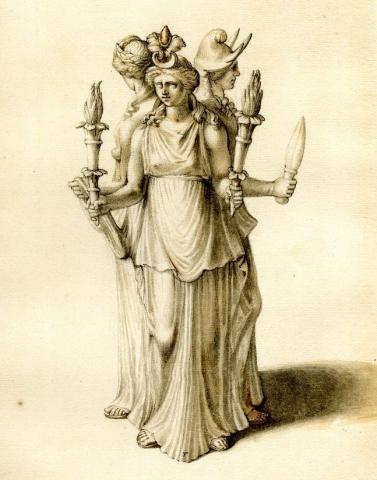




It amazes me how so many traditions follow these ancient protocols and roles,